


Corn is among the most productive crops of modern farming. According to statistics, corn grain production in Ukraine has tripled over the last 10 years. Because of the small livestock numbers and the lack of deep processing, the grain grown goes for export.
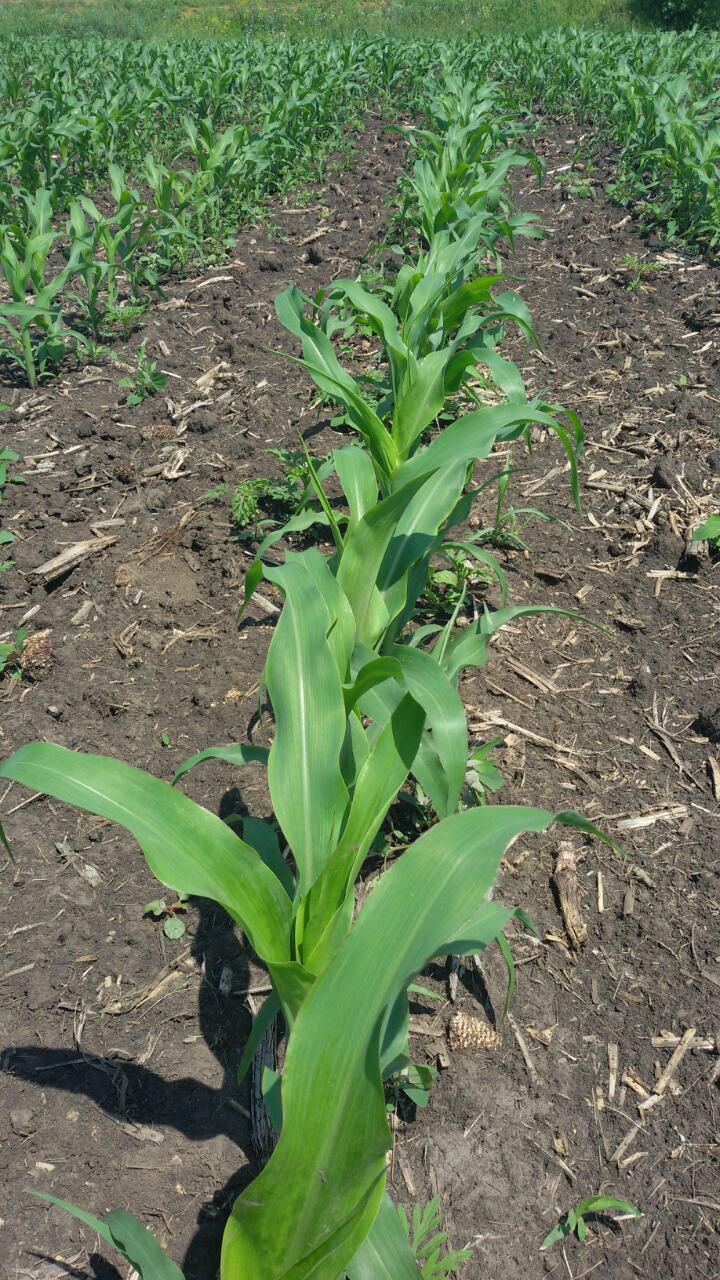
Among the factors influencing the yield of this crop, mineral nutrition takes one of the leading places. To form a high yield, corn needs balanced supply of macro- and microelements. The priority nutrient is nitrogen.
Corn uses the aftereffect of phosphorus and potassium fertilizers applied to the preceding crop quite effectively, although phosphorus and potassium are often in deficit, sometimes with visual signs of shortage. Phosphorus deficiency most often appears from the 4 to 8 leaf stage, and potassium at the start of ear formation. To some extent the shortage of these two macroelements can be offset by compositions from the FITOSTART line, in particular FITOSTART Jet at 3–4 l/ha to reduce phosphorus deficiency and FITOSTART Potassium at up to 5 l/ha, respectively, to reduce potassium deficiency.
At the same time, insufficient attention is still paid to microelement nutrition of corn, and wrongly so, since even when they are present in the soil plants can experience deficiency. The key microelement for corn plants is zinc, which plants need in the early stages of development. Also important are boron, to raise plant productivity, keep vascular bundles healthy and improve pollination, iron on soils of heavy texture in dry hot weather, and manganese - especially relevant in cool weather and with excess moisture, as we see in May this year. To improve nitrogen uptake from the soil in this period, it is desirable to feed with ECOLINE Manganese (Chelate) at 1.0–1.5 l/ha.
With the development of 6–8 leaves corn enters the fast growth phase, the formation of the plant's male and female inflorescences continues, and they need increased nutrient supply. As a rule, the stress effect of herbicides appears at this time and plants begin to lag in growth. To bring corn out of stress we recommend foliar feeding with special fertilizers containing readily available amino acids, phytohormones and phosphorus in the form of phosphites. From the range of fertilizers produced by ECOORGANIC it is advisable to use: ECOLINE Phosphite (K-Amino) 1.0–2.0 l/ha, GROS Health 1.0–2.0 l/ha, and also ECOLINE Universal Growth (Amino) at 1.5–2.0 l/ha. If the farm's technical capabilities do not allow entering the crop later, 0.5–1.0 l of boron should be added to the tank mix to prevent kernel gaps caused by poor pollen quality. If crops are not under stress, foliar feeding at this stage of plant development can be done with the tank mix ECOLINE Corn (Chelates) 1.5 l/ha + ECOLINE Boron (Premium) 1.0 l/ha.