

Can the yield of «stubble» potato be raised? Yes, it is possible!
The climate of southern Ukraine allows potatoes to be grown as a second crop, planting them after winter cereals are harvested.
By its biological features this crop needs moderate temperatures (17–22OC) during tuber formation. An obstacle to a high yield, even under irrigation, is high air and soil temperature (>30OC) in this phase (as was observed in southern Ukraine in September 2020).
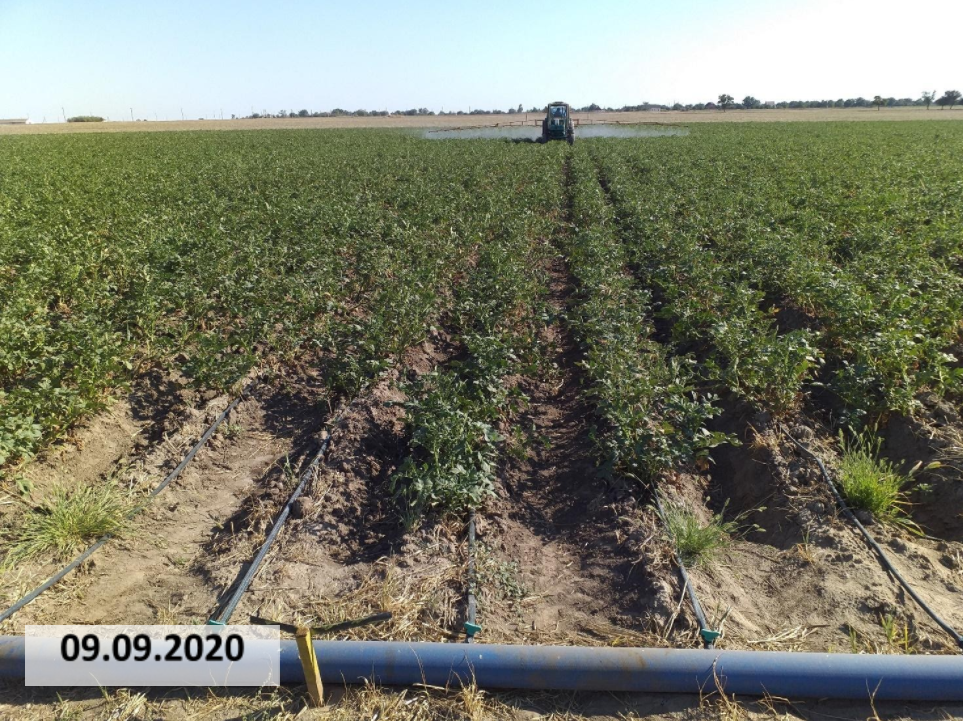
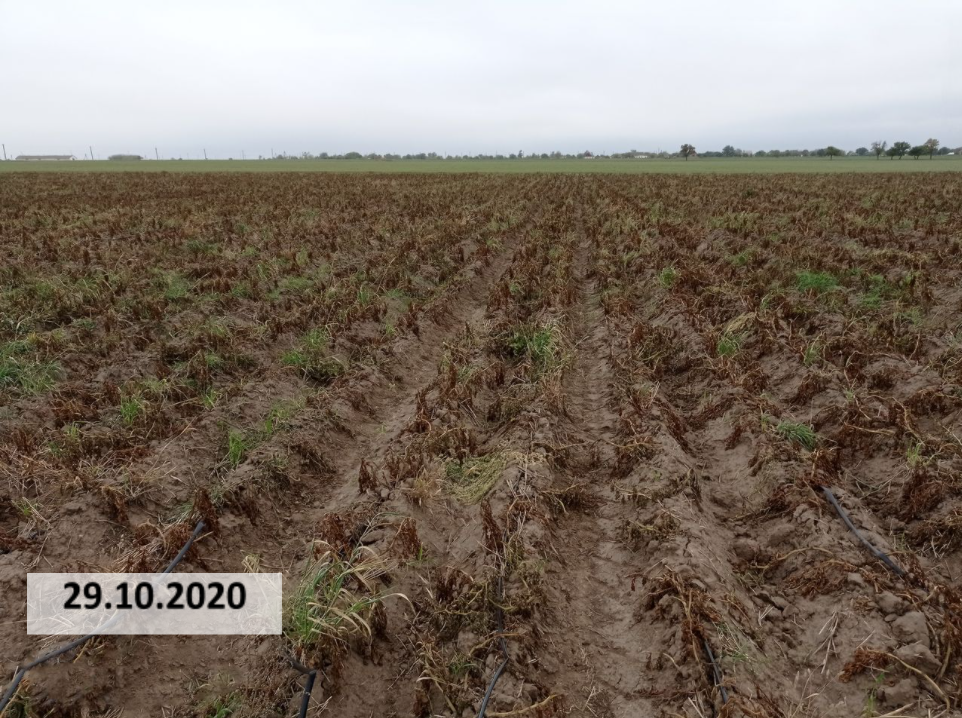
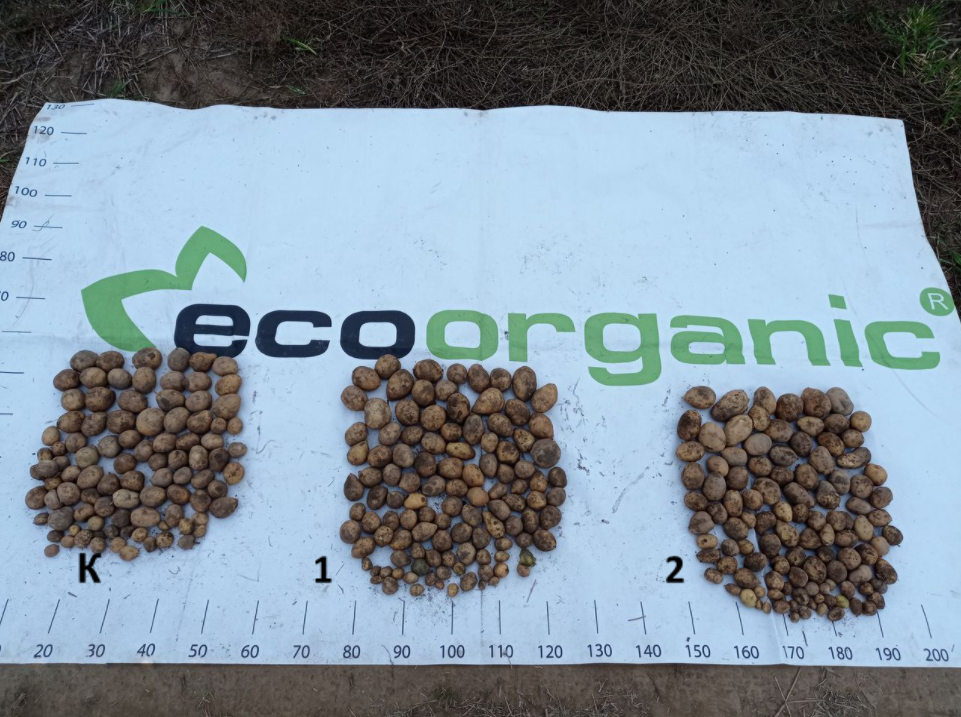
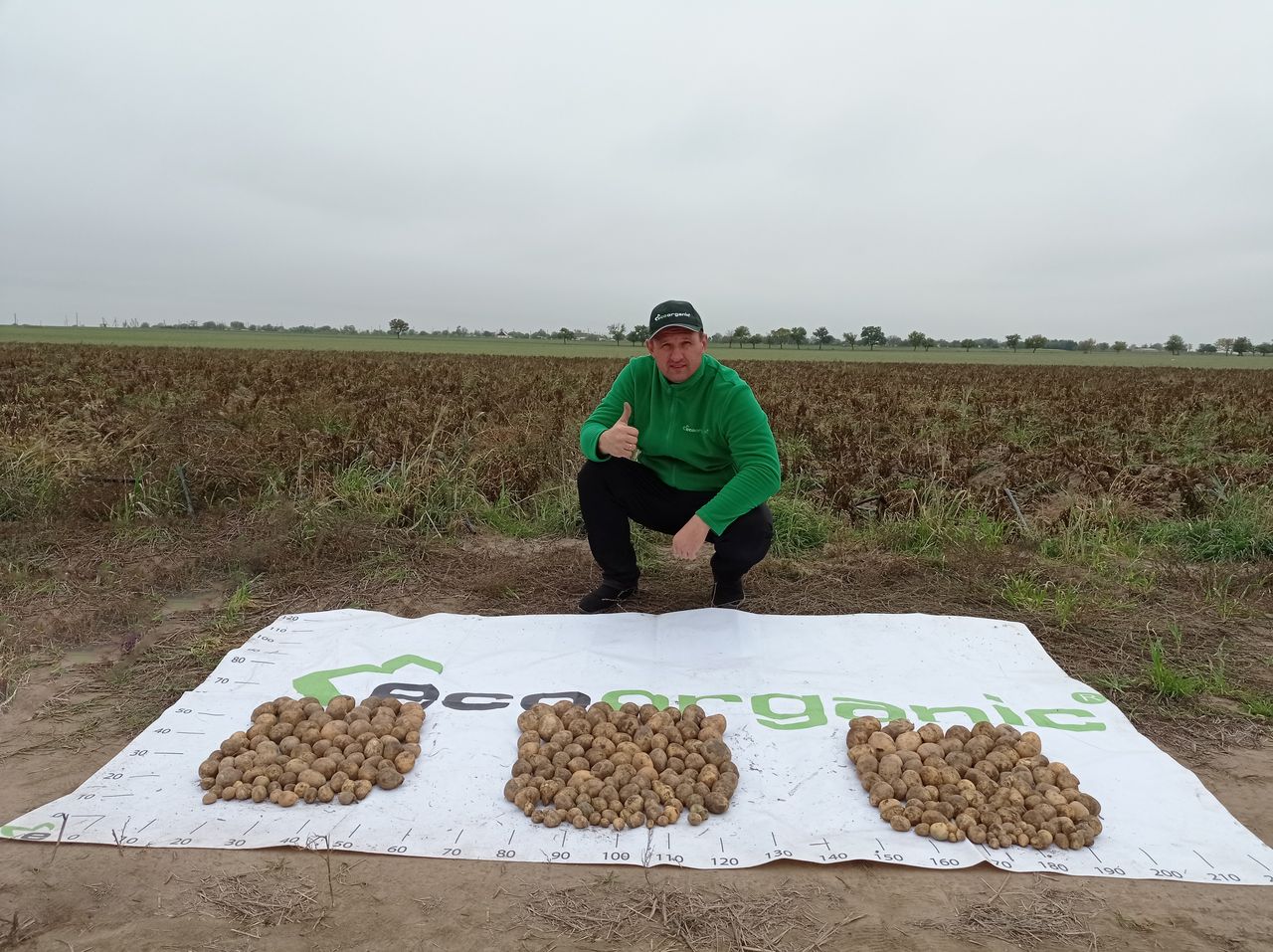
To study the anti-stress properties of ECOORGANIC fertilizers with amino acids, GROS Amino-Zn and GROS Health (with an updated formulation) against temperature stress, together with Agroanaliz we set up a field experiment on potato planted after winter barley harvest (first ten days of July). The study was carried out on 1.9 ha in 3 replications. Fertilizers were applied on 9 September, at the start of tuber formation. The last interim assessment was done right before harvest, on 29 October: in both experimental variants we note a substantial rise in yield and tuber size compared with the control. GROS Amino-Zn performed best: thanks to the combined action of amino acids and zinc in high temperatures, yield rose by 16.4% and the number of tubers of the largest fraction by 37.9%. Applying GROS Health (updated amino acid-based formulation) also gave a substantial yield increase.
| Average of 3 replications | |||||
| Variant | Yield, t/ha | Fraction >6, t/ha | Fraction 4–6, t/ha | Small fraction, t/ha | Without small, t/ha |
|
29,3 | 14,5 | 13,6 | 1,2 | 28,1 |
|
34,1 (+16,4%) | 20,0 (+37,9%) | 12,9 | 1,2 | 32,8 |
|
32,9 (+12,3%) | 15,7 (+8,3%) | 15,5 | 1,6 | 31,3 |