


Crop growing technologies are developing rapidly in every possible direction, and plant mineral nutrition systems are no exception. Besides the long-known traditional forms of fertilizers, many products have come onto the market both of direct action (that is, containing improved forms of nutrients) and a whole range of those which, without formally being main sources of nutrients, stimulate plants to take up the compounds they need. Despite the large number of patented substances able to provide a stimulating effect on plants, the number of truly effective products remains limited. Of interest here for farmers are products containing phosphorus in the form of phosphite. They stimulate the growth of both the root system and the plant as a whole extremely effectively, have a fungistatic effect and combine excellently with other tank mix components, while lowering the pH of the working solution to slightly acidic values.
Because phosphites are often used to control pathogenic organisms, they are registered as fungicides in many countries. The use of phosphites as an analogue of phosphates (as alternative fertilizers in phosphorus nutrition) is limited and is often a subject of controversy, and in some cases a manifestation of unfriendly competition.
Analysis of the scientific literature gives a clear and unambiguous answer on how plants absorb forms of phosphorus: phosphates and phosphites enter plants by one route, through phosphate transporters (Varadarajan et al., 2002; Jost et al., 2015). Phosphate transporters mainly take up phosphates (Guest and Grant, 1991; Ullrich-Eberius et al., 1981), but they probably also take part in the uptake of phosphites, most likely thanks to the high- and low-affinity systems of the transport machinery (d'Arcy-Lameta and Bompeix, 1991; Danova-Alt et al., 2008; Jost et al., 2015). In higher plants four families of phosphate transporter genes (named Pht1, Pht2, Pht3 and Pht4) have been found, encoding 19 protein products (that is, Pht enzymes), some of which have been described (López-Arredondo et al., 2014; Shen et al., 2014). For example, the Pht1 family includes plasma membrane proteins involved in uptake of phosphates from the soil solution and their redistribution within the plant, and members of this same family function as H2PO4−/H+ symporters and as phosphite transporters. Pht enzymes catalyze phosphate uptake, redistribution and homeostasis. They have been found not only in roots but also in the aboveground parts of plants. Indeed, Nussaume and co-authors (2011) point out that transporter genes are equally active in roots and in leaves, so phosphates and phosphites can enter the plant from nutrient solutions through the roots in hydroponics and through solutions sprayed on leaves, providing phosphorus nutrition. However, given the doses of phosphites for foliar application and through drip irrigation systems, as a source of phosphorus they cannot compete with phosphates, whose doses are tens of times higher.
In recent years unfounded claims about the effect of phosphites on plants and their role in mineral phosphorus nutrition have become a thing of the past. Many former critics of phosphites have become convinced of their effectiveness and now actively promote the use of such fertilizers themselves.
However, along with the growing popularity of phosphites, a number of falsified products have appeared on the market which, instead of the phosphorus in phosphite form stated on the labels, contain mainly phosphates. Naturally, such products have a much lower cost price than fertilizers containing phosphite only. At best they serve as phosphorus feeding, but have neither a stimulating nor a fungistatic effect. At the same time they mix poorly with other tank mix components, cause sediment, reduce the efficiency of active substances in the working solution and form phosphorus compounds that plants cannot absorb. Unfortunately, farmers often apply «cheap phosphites» without knowing this and, not getting the expected effect, discredit the effectiveness of phosphite fertilizers.
Today «ECOORGANIC» is the leader in the production of phosphite fertilizers in Ukraine and ensures the high quality of every product supplied to farmers. The content of phosphorus in phosphite form in all compositions corresponds to the concentrations stated on the labels and in the catalog. Constant control of the whole production chain, from the quality of components to the finished product, gives confidence that a consumer who applies these products will get the expected results. Many years of field trials of phosphite fertilizers have convincingly proved their high efficiency on all crops without exception, in all soil and climate zones of Ukraine (fig. 1, 2).
Given the rapid rise in the price of basic fertilizers and the forecast reduction in their use, feeding with phosphites is one way of strengthening the ability of plants to absorb available nutrients. Therefore in the near term interest in phosphite fertilizers will only grow, and accordingly the question of their quality will remain relevant.
How to tell whether a product is falsified?
Detecting phosphates in a fertilizer solution is not difficult. It is a simple chemical reaction: when a solution of a zinc salt is mixed with a solution of a fertilizer containing phosphate, the mixture turns cloudy and then forms a sediment. When mixed with a phosphite, no sediment forms. For complete confidence in the quality of the phosphite product the consumer buys, we recommend using a laboratory's services. Incidentally, such a service can also be ordered from ECOORGANIC.

Fig. 1. Effect of ECOORGANIC phosphite fertilizers on the development of potato plants
(tuber treatment before planting)
K – control, B – ECOORGANIC variant. Adelaida LLC, Kherson region, 2021
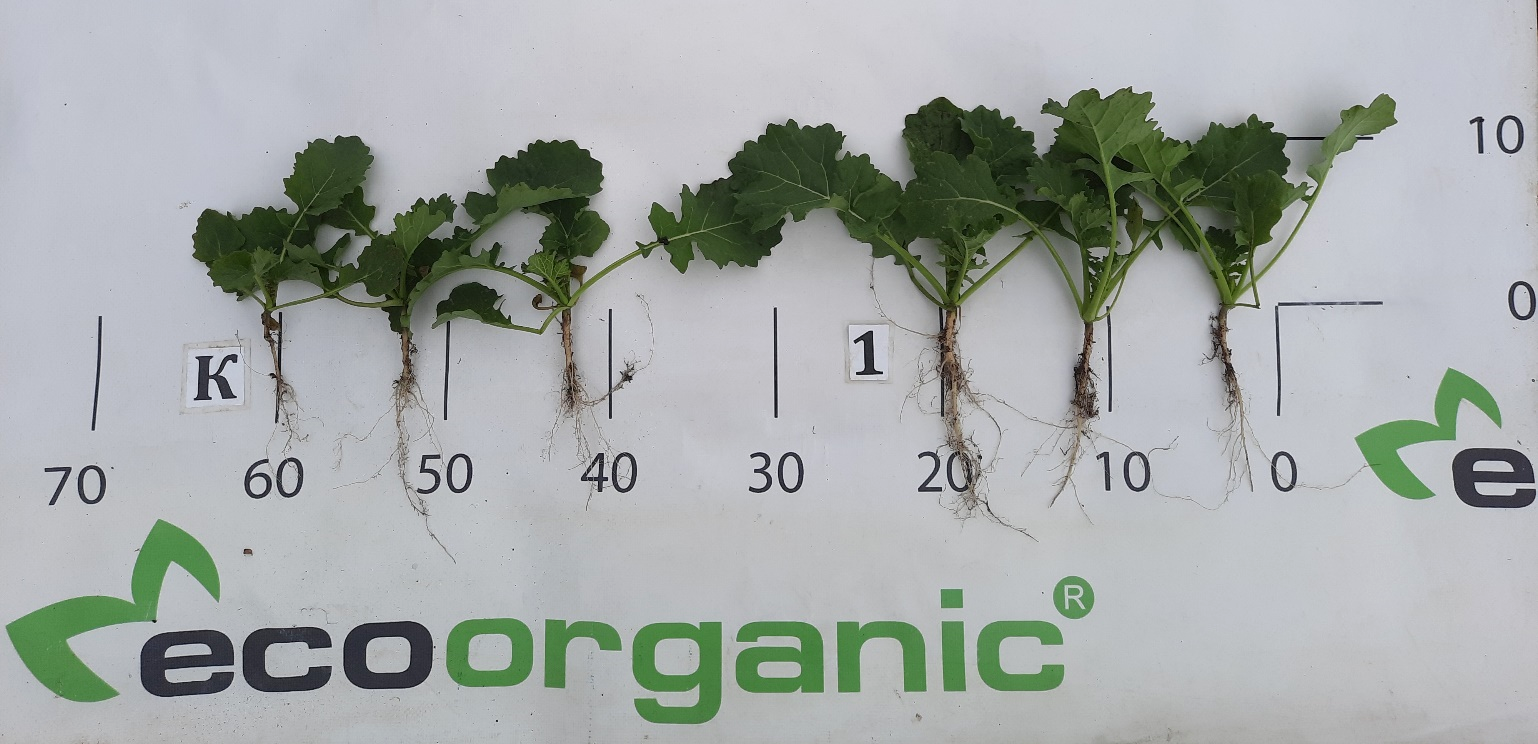
Fig. 2. Effect of ECOORGANIC phosphite fertilizers on the development of winter rapeseed plants
(foliar feeding)
K – control, 1 – ECOORGANIC variant. Pravda LLC, Kirovohrad region, 2021
The role of phosphates and phosphites in plant nutrition
| PHOSPHATE | PHOSPHITE |
| Main purpose | |
| Source of phosphorus | Fungicide |
| Biostimulant | |
| Anti-stress agent | |
| After conversion in cells becomes a source of phosphorus | |
| Uptake temperature | |
| ≥+ 15 °C | ≥+ 5 °C |
| Speed of uptake through the leaf surface | |
| From several days to several weeks | Up to 24 hours |
| Interaction with other nutrients | |
| Interacts with Ca+3, Fe+3, Al+3, forming poorly available forms of these elements | No formation of poorly available forms has been established in interaction with Ca+3, Fe+3, Al+3 |
| Effect on plants | |
| Stimulates root system growth | Stimulates root system growth |
| Raises yield and harvest quality | Chlorophyll formation |
| Brings plants out of stress | |
| Raises yield and harvest quality | |
| Promotes nitrogen uptake at low temperatures (≥+5 °C) | |
| Other characteristics | |
| Combines excellently in tank mixes with crop protection products and raises their effectiveness thanks to its buffering properties | |